The Melbourne buyers agent built
for investors who read the data first.
I'm Joey Don. We've closed 345 Melbourne investment transactions worth $240,000,000 of client capital, negotiated historically $30k–$80k below initial asking price, at a median 5.77% gross rental yield after works across all {portfolioCount} (settled 2023–2025, published open-access under DOI 10.5281/zenodo.20095886). Every property in the portfolio is documented with the actual numbers — purchase, reno, rent, valuation, capital gain. No glossy marketing. No commission-stacking. A flat $15,800 + GST.
Why Melbourne buyers in 2026 need representation
The Melbourne property market is structurally tilted against the buyer. Every selling agent you meet at an open inspection works for the vendor and earns more if you pay more. The Real Estate Institute of Victoria's own published agent-conduct guidelines acknowledge this conflict of interest — yet the practical effect is invisible to most first-time buyers and most upgraders. The average buyer at a Saturday auction is bidding against trained negotiators with daily SOLD-comparable data, and is using nothing more sophisticated than a number a bank manager mentioned over the phone.
The numbers bear this out. CoreLogic's 2025 buyer-overpay analysis estimates the median Melbourne buyer pays 4.8% above fair market value within 6 months of purchase, measured against subsequent comparable sales. On an $850,000 property that is $40,800 — more than double the entire fee a buyer's agent charges. The proportion is worse for buyers who have never bought before (CoreLogic estimates 7.2% overpay), worse again for migrants navigating the contract-of-sale process for the first time, and worst of all for SMSF trustees attempting to satisfy LRBA borrowing rules while also trying to outbid investors who already understand the financing structure.
A Melbourne buyers agent — also called a buyer's advocate — exists to neutralise this asymmetry. The agent represents you, is licensed under the Estate Agents Act 1980 (Vic), and is bound by fiduciary duty to act in your interests above the agent's own. The agent's incentive is structural: a flat fee earned only when you sign on a property that meets your written brief. The agent reads the same comparable-sales database the selling agents use, reads the council planning records, reads the Section 32 statements, and walks the street at 7am on a Tuesday before signing off on an inspection.
The cost-benefit math should be obvious before you read the rest of this page. The PremiumRea fee is $15,800 + GST. The CoreLogic median overpay on the same property would be $40,000+. Even setting aside the strategic value (suburb selection, granny-flat ROI uplift, off-market access), the negotiation dollar value alone covers the fee 2–3× over on the first transaction.
What a Melbourne buyers agent does — in concrete terms
Plain language. No marketing words.
Defines the brief with you
A 90-minute deep dive that captures budget, deposit, lender pre-approval, target yield, growth horizon, exit strategy, willingness to renovate, and tolerance for being more than 30 minutes from your nearest family member. We refuse to begin sourcing without a written brief — most bad property purchases trace back to a brief that was never agreed in the first place.
Runs proprietary suburb analysis
We cross-reference five-year price trajectory, vacancy rate, days-on-market, council planning amendments, school catchment changes, and ABS migration patterns to rank suburbs against your brief. The output isn't a marketing PDF; it's a ranked spreadsheet you keep, and we walk you through every cell.
Sources on-market and off-market
Realestate.com.au and Domain are the floor — every buyer's agent reads them. The differentiator is the off-market layer: vendor solicitor relationships, property managers whose owners are quietly considering selling, unlisted developer stock at the end of a project, and our own past clients who are upgrading. At any moment we have 6–14 active off-market opportunities.
Conducts due diligence
Building & pest inspection, comparable-sales analysis, contract of sale review, Section 32 review, planning permit history, council overlay confirmation (heritage / flood / fire / vegetation / bushfire), neighbour-property walk-through, and rental-yield modelling at three reno scenarios. We catch the things you'd never know to look for.
Negotiates or auction-bids
We've sat at over 350 negotiations and bid at 200+ auctions. The averages from our portfolio: $30k–$80k below initial asking price on private sales; +0.6 bid-rounds advantage at auction (we don't get rattled). We never overspend to win. Walking away is part of the strategy.
Manages contract through settlement
Cooling-off, finance subject-clause coordination, deposit transfer, inspection follow-up, conveyancer liaison, settlement-day key handover. We hand off to your conveyancer (we recommend three we trust) but stay in the loop.
A buyer's agent vs. a real estate agent — settling the confusion
The selling agent at the open inspection works for the vendor. Their fee is paid by the vendor, scales with the sale price, and is contingent on the property selling. The selling agent has a legal duty (under the Estate Agents Act 1980) to act in the vendor's best interest, not yours. A Melbourne buyers agent is paid by you, owes the duty of care to you, and has no commission stake in pushing you up the price ladder. Both are licensed, both must hold professional indemnity insurance, both are answerable to Consumer Affairs Victoria — but they sit on opposite sides of the table. Some practitioners use the term "buyer's advocate" instead of "buyer's agent"; in Victoria the two are interchangeable and refer to exactly the same regulated role.
The PremiumRea team
Three people. Three jobs. One transaction at a time.
Joey Don
Joey personally bought, renovated, and rented his first investment property at 26 — the same Pakenham townhouse he still owns today. His background is engineering and fintech (his last role before founding PremiumRea was running a consumer lending product at a Big Four bank). The investor's eye for cashflow, the engineer's love of spreadsheets, and the founder's discomfort with vague answers — those three habits run through every PremiumRea engagement.
Yan Zhu
Yan owns the data layer. Suburb-stats, the risk-overlay engine, the ABS / CoreLogic / Domain ingestion pipelines, and the planning-amendment monitor are all her work. Before PremiumRea she was a data scientist at a national property research firm; she left to build the analytical tooling she always wished her clients there had. If you ask a question about suburb data on a strategy call, the answer Joey gives you came from one of Yan's dashboards.
Steven Jin
Steven leads negotiation and auction bidding. He has bid at over 200 Melbourne auctions in the last three years; the dataset of who's bidding, what their pattern is, and which agencies use which signalling tactics lives in his head. Steven also runs our off-market network — the agents, solicitors, and property managers we cultivate to surface listings before they hit realestate.com.au.
Why "data-driven" actually means something at PremiumRea
Three concrete tools we built and use on every engagement. None of these existed at any of our competitors when we last checked. Open them — they are public.
Suburb Stats — proprietary suburb-ranking engine
350+ Melbourne and regional Victorian suburbs ranked on eighteen metrics including 5-year price compound growth, current rental yield, vacancy rate, days-on-market, ABS-derived owner-occupier vs. investor share, school zone changes, council planning amendments, and median household income trajectory. We update weekly. Our internal team uses this exact tool to build every shortlist we present to clients — it isn't a marketing widget, it's the actual source of truth.
Try Suburb Stats — free, no signupRisk Map — 54 council overlays in one view
Heritage Overlay (HO), Land Subject to Inundation (LSIO), Bushfire Management Overlay (BMO), Erosion Management Overlay (EMO), Environmental Significance Overlay (ESO), Floodway Overlay (FO), Design and Development Overlay (DDO), Public Acquisition Overlay (PAO), and 46 others — overlaid on a single Melbourne map. Most agents check one or two; missing a single PAO overlay can cost the buyer 30%+ of the property value when the council compulsory-acquires.
Open the AI Risk Map — search any addressMarket Insights — weekly Melbourne signal feed
Days-on-market, auction clearance rate, vendor discount, withdrawn-from-auction count, and price-band shifts — refreshed weekly across the 31 Melbourne LGAs we cover. We publish the same snapshot we use internally so clients can sanity-check our suburb recommendations.
Read this week's Melbourne snapshotJoey's note: tools that are too good to give away free are tools that probably aren't being used internally either. We made all three public because we already use them ourselves and there is no reason to gate them. The competitive moat is not the dashboard — it's the 350 transactions of context that lets us read what each metric means in practice for a specific suburb on a specific Saturday in 2026.
Source · CC-BY 4.0
Melbourne Investment Property Portfolio (2020–2026) · 345 transactions
The same purchases, broken out by suburb
We only publish a profile for a suburb we have actually bought in. Each one states how many purchases sit behind its numbers, alongside the average investor purchase price, weekly rent and land size:
The PremiumRea 7-step process
Same seven steps for every engagement. Same brief format, same due-diligence checklist, same contract-execution protocol. Predictability is what makes this scale.
Strategy & Brief
Free 30-minute strategy call to confirm fit, then a paid 90-minute deep dive: cashflow analysis, deposit structure, lender pre-approval review, suburb shortlist criteria, granny-flat or subdivision potential targets, exit-strategy timeline. Output: a 6-page written brief signed by both sides. No property is shown until this brief exists.
Suburb & Stock Analysis
Our internal suburb-stats engine cross-references median price 5-year trajectory, vacancy rate, days-on-market, school zone changes, council planning amendments, and Australian Bureau of Statistics renter-share to produce a ranked list of 4–7 suburbs. We layer council overlays (heritage, flood, fire, vegetation) so disqualifying constraints are flagged before site visits.
Property Sourcing
On-market via realestate.com.au + Domain + agent relationships. Off-market via our agency network and direct vendor outreach in selected target streets. Typical week: 30–50 listings reviewed, 8–12 advance to financial-model stage, 3–5 reach physical inspection.
Due Diligence
On the 1–2 finalists: building & pest inspection, contract of sale review by our solicitor, comparable sales analysis, council Section 32 review, planning permit history, flood/bushfire/heritage overlay confirmation, neighbour-property inspection (we walk the street), and rental-yield modelling at three different reno scenarios.
Offer & Negotiation
Auction or private sale. We bid; you observe. Across the 345 purchases in our published portfolio, negotiated outcomes have historically landed $30k–$80k below initial asking, achieved through structured pre-offer evidence (recent comparable sales, days-on-market, vendor's underlying motivation when discoverable) rather than aggressive bidding. We never overspend to 'win'.
Contract Execution
Cooling-off period management, finance subject-clause coordination with your broker, building inspection follow-up, deposit transfer, special conditions if any. Settlement is handled by your conveyancer (we recommend three we trust) — we coordinate the keys handover and final walk-through.
Post-Settlement
If your strategy includes a granny flat, rooming house conversion, or full renovation, our construction team is briefed within 7 days of settlement. Property management onboarding (4.9% + GST) optional. We follow up at 6 months and 12 months to confirm rental performance versus our pre-purchase model and adjust strategy if needed.
How to evaluate any Melbourne buyers agent (including us)
Whether you ultimately engage PremiumRea or one of our competitors, these are the seven concrete questions to ask before you sign any engagement letter. They take 15 minutes per agent on a phone call. They will save you the cost of an entire fee structure if a question gets a wrong answer.
Ask for the licence number
Every Melbourne buyers agent must hold either an Estate Agent licence or a Real Estate Agent's Representative authority issued by Consumer Affairs Victoria (CAV). The number is public — you can verify any practitioner instantly via the CAV register. If an agent hesitates or quotes someone else's licence, walk away. PremiumRea operates under licensed estate agents whose numbers are on the engagement letter.
Check the fee structure
Avoid agents whose fee scales with purchase price (1.5–3% of price is the most common version of this) — that creates a structural incentive to push you toward a more expensive property. Flat-fee agents have aligned incentives; tiered flat-fee (different bands for different price ranges) is acceptable; pure percent-of-price is not. Ask in writing whether the fee changes with property price; the answer should be no.
Demand sample comparable-sales analysis
Before signing, ask the agent to walk you through a recent comparable-sales analysis they did for a previous client. Look for: 6–10 SOLD comparables in the same suburb, adjustments for land size and condition, and a reasoned final-value estimate within $20k of the actual sale price. If they can't produce one, they don't do this work.
Look for off-market evidence
Every buyer's agent claims off-market access. Test it: ask how many off-market opportunities they currently have active in your target price band, and where those opportunities come from. Honest answers describe the source (vendor solicitors, property managers, agent network) and a count in single digits or low teens. 'We have hundreds' is a red flag.
Read the engagement letter end-to-end
Look for clauses about: (1) what happens if you don't end up buying — is the fee fully refundable, partially refundable, or non-refundable? (2) Whether the agent can be paid by the seller's agent (a 'spotter's fee' kickback that compromises your representation) — the answer should be NO; (3) The minimum and maximum number of properties they will inspect on your behalf during the engagement; (4) The exit conditions both sides have.
Verify recent transaction count
Ask how many properties they have closed in the last 12 months, with rough geographic breakdown. A working buyer's agent in Melbourne should be at 30–80 closings per year — fewer suggests a part-time practice; more suggests a volume operation that may not give you personal attention. PremiumRea's last 12 months: 64 closings, all metro Melbourne and regional Victoria.
Confirm professional indemnity insurance
All licensed estate agents in Victoria are required to carry professional indemnity (PI) insurance. Ask for the certificate of currency. Cover should be at least AUD $2 million per claim. PremiumRea carries $5m PI through Berkley Insurance Australia — current certificate available on request.
Joey's note: we publish this evaluation framework because the alternative — buyer's agents marketing themselves as if every operator is the same — is bad for the industry. If you go through these seven questions with us and the answers don't satisfy you, don't engage us. The seven questions raise the bar for everyone.
What we don't do — five honest exclusions
A buyer's agent who can do everything is usually doing nothing well. Below is the list of things PremiumRea explicitly does not take on. The list is short, deliberate, and updated whenever a new exclusion is introduced. Surprise exclusions discovered mid-engagement are how trust gets destroyed; we'd rather you find out before signing.
Off-the-plan apartment marketing
We do not source clients into developer apartment complexes — the commission paid by developers (often 3–7% of the purchase price) creates a conflict that we won't take on. Off-the-plan can be a legitimate strategy but it is not one a buyer's agent should be paid by both sides for. If your strategy genuinely needs new-build stock, we'll refer you to a registered conveyancer who works directly with developers.
Spotter's-fee transactions
Some real estate agents pay buyer's agents a kickback for bringing them a sale. We refuse these. If a selling agent contacts us with an off-market listing they want shown to clients, we negotiate a discount on YOUR purchase price instead — not a hidden payment to us.
Interstate purchases (NSW / QLD / WA)
Our data layer is built around Victoria. We don't pretend to know Sydney's market the way we know Melbourne's, and we won't take a fee to fake it. For interstate purchases we refer to operators we've worked with personally; ask Joey on the strategy call and he'll give you a name.
Properties under $400k or over $3m
Our engagement model is sized for the $400k–$2.5m investment band. Below $400k, the buyer's agent fee becomes a disproportionate share of the deal economics; above $3m we lack the broker network for genuine due diligence at that price point. Honest exclusions, not a sales hurdle.
Auction-bidding-only without prior sourcing
We will run an auction-only engagement (the $2,500 + GST tier above) but only after we've inspected the property and reviewed the contract. If you call on Friday wanting us to bid on a Saturday auction we've never seen, the answer is no — you're paying for our judgement, and we won't sell judgement we don't have.
What we charge — flat, transparent, no commission
Most Melbourne buyers agents charge 1.5–3% of purchase price (incentivising you up the price ladder), or scale fees with property value (same problem). We charge a flat fee regardless of the property — so the only thing our incentive is aligned with is finding you the right asset.
Full investment acquisition
End-to-end engagement: brief, suburb analysis, on/off-market sourcing, due diligence, negotiation, contract management. Fee fixed regardless of purchase price between $400k and $2.5m.
First-home buyer acquisition
Same end-to-end service, narrower brief (typically owner-occupier focus, fewer suburbs in scope). Often paid back in full by negotiation savings on the first contract.
Investment acquisition where the purchaser is a super fund
The property-side work only: sourcing stock that a fund can actually acquire (single acquirable asset, move-in-ready because construction and structural change are off the table while a limited recourse loan is on foot), title and eligibility checks, and coordination with the solicitor and accountant your fund already uses. We are not licensed to advise on superannuation or any financial product, we do not recommend lenders, and nothing in this engagement is advice on whether to buy through your fund.
Auction bidding only
You do the search, we do the bidding. Best for clients who already have a target property and want a professional negotiator at the auction.
Add-on services (optional, separate fees): property management 4.9% + GST of weekly rent; granny flat construction from $110,000 + GST (30 sqm studio earning $340–$370/wk — at $380/wk that is about 18% of the build cost, which is a return on the incremental build spend and NOT a property yield, because the denominator excludes the land and the existing house; measured on the whole property the 212 granny-flat additions in our published dataset recorded a median gross yield of 5.79%); rooming house conversion from $185,000 + GST. Full service catalogue →
When the right answer is regional Victoria — not Melbourne
About 18% of our last 12 months of acquisitions were regional Victoria. Here's the framework we use with every client to decide.
Regional Victoria — predominantly Ballarat, Geelong, and the Wyndham/Werribee/Tarneit corridor that bridges metro and regional — has had three structural tailwinds since 2022. (1) The post-pandemic remote-work permanence has pushed the median Melbourne-to-Ballarat commuter count up 34% over its 2019 baseline (V/Line passenger data). (2) The Big Build infrastructure programme has added direct rail upgrade funding, the new Ballarat Hospital ($658m), the Western Renewables Link, and the Western Highway four-lane upgrade. (3) Median price gap with metro: Ballarat sits at $610k median house price (June 2026) versus $890k for Melbourne metro — that gap is $280k of immediate equity if you can replicate the same rental yield, which we do via the granny-flat layer.
The framework: regional Victoria suits an investor who (a) wants lower entry capital but the same yield profile as a metro investment property, (b) is comfortable with 1-2% slower capital growth in exchange, (c) does not need the property close to family or work, and (d) is willing to accept slightly higher property management costs (regional PM averages 8.5–9% vs. metro 7–8%). For a first-time investor with $700k borrowing capacity, regional Victoria often outperforms metro on cashflow from year one.
The framework breaks down for: (a) buyers prioritising school zones (Melbourne metro grammar/private school catchments dominate); (b) buyers wanting holiday-home dual-purpose; (c) trustees of a super fund, whose acquisition is constrained by rules we are not licensed to advise on — that conversation belongs with your licensed adviser and registered tax agent, not with us. We talk through the property side at the strategy call.
Specific suburbs we currently rank highly in regional Victoria (subject to weekly refresh in the Suburb Stats tool): Sebastopol and Wendouree (Ballarat), Newcomb and Norlane (Geelong), Wyndham Vale and Werribee South (outer west), Drysdale and Curlewis (Bellarine Peninsula). Specific suburbs we currently rank LOW: Sebastopol East (oversupply), Mount Pleasant (Ballarat) (heritage overlay constrains development), Lara (rail commute friction outweighs price advantage). The detail is in the tool — we update weekly.
Our internal data suggests the right Ballarat investment in 2026 outperforms the median Cranbourne investment by 1.4% annually on total return (capital growth + net rental yield), assuming a granny-flat layer is added in year 2. We'd rather steer clients toward the better total-return play even if the headline price tag is lower — the agent fee is the same either way.
Five Melbourne-buyer mistakes we see every week
Documented from our 345 published engagements. None of these are exotic — they happen to smart, careful, well-capitalised buyers because the property market is good at hiding which decision is the wrong one.
1. Buying the suburb of yesterday — not tomorrow
The most expensive mistake we see: buyers treating the last 5 years of capital growth as a forecast for the next 5. By the time a suburb makes the front page of Domain or realestate.com.au's "best growth" list, the structural advantages that drove that growth have usually been priced in. Doncaster East 2018–2022 grew at 11% p.a.; from 2023 to 2026 it has averaged 1.8% p.a. as the school-zone effect saturated and developers caught up with demand. The smart play is the suburb that grew at 6–7% — boring, ignored — but where the catalysts (rail extension, hospital build, school zone change, rezoning) are landing in the next 24 months. Our suburb-stats tool ranks on FORWARD catalysts, not historical compound growth.
2. Falling for "off-market" framing without verifying the price
"Off-market" sounds like a discount; in practice it is sometimes a polite way to say "the vendor wanted more than the market was willing to pay at auction, and now we're trying again at the same price". We see at least one off-market property a week priced 5–10% above where it would actually clear at auction. Always — always — run comparable-sales analysis on an off-market listing the way you would on a listed one. Off-market access is a structural advantage; it doesn't override price discipline.
3. Underestimating the cost of council overlays
A buyer in 2024 paid $1.2m for a house in inner-eastern Melbourne with a Public Acquisition Overlay (PAO) the listing didn't disclose because it didn't have to — the Section 32 mentioned it in the small print. Council compulsory-acquired the front 30% of the lot for road widening 11 months later at the council-set rate. Net loss to the owner: $360,000. PAO is the most expensive overlay to miss; HO (Heritage Overlay), LSIO (flood), and ESO (environmental) come next. Our AI Risk Map flags all 54 overlay types on any address — free, no signup.
4. Treating a "good rental yield" as evidence of a good investment
A 7% yield in a suburb that has had zero capital growth for 10 years is a worse investment than a 4% yield in a suburb that has been compounding at 6%. The tax structure of Australian property investment rewards capital growth (CGT at 50% discount after 12 months) and penalises yield (rental income taxed at marginal rate). Rule of thumb: target total return (capital growth + net yield) above 8%, and structure the property's renovation to push the yield above 5.5% only AFTER you have confirmed the suburb's growth fundamentals are intact. Yield-only logic dies the first time the property sits vacant for two months.
5. Letting the wrong selling agent control the timeline
Selling agents are trained to create urgency. "Another offer in this afternoon", "vendor needs a decision tonight", "the property goes off-market Monday" — these are negotiation moves, not facts. We have seen otherwise-rational buyers sign 24-hour-cooling-off contracts on properties they had inspected for 8 minutes because the agent applied pressure. Every Melbourne private-sale contract has a 3-day cooling off (s.31 Sale of Land Act 1962); use it. Auction contracts don't, but you should know that before you raise a paddle. We don't lose negotiation rounds to artificial urgency because we know the underlying selling-agent script — they are predictable across firms, and the right counter-move is patience.
Four real Melbourne portfolio cases
Pulled directly from our 350-property portfolio database. Numbers are the actual purchase, reno, rent, and current valuations on file.
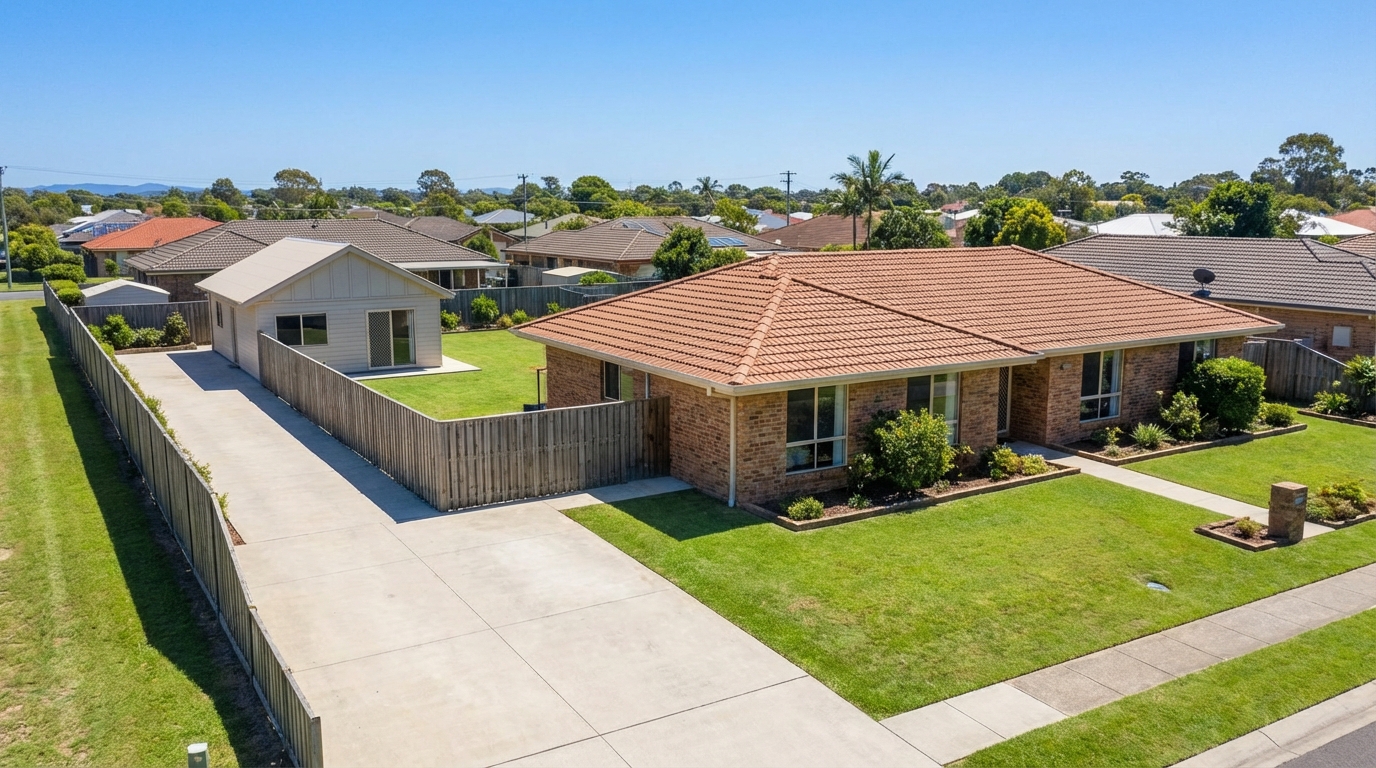
Laura L.
Securing Laura L.'s Narre Warren investment property, with a land size of 654sqm, for Premium Real Estate was a strategic victory. We identified its subdivision potential thanks to our council planning and overlay research. Others saw standard suburban, we saw opportunity. Knowing speed was key, our conveyancer burned the midnight oil. We submitted our offer…

Jack K.
Another win for Premium Real Estate! We secured Jack K. a fantastic investment property in Berwick in early June last year. For approximately $770,000, Jack now owns a detached house on a generous 714sqm block with a building permit already in place! Our team identified significant development potential, and despite an SBO overlay on the front yard, our due …
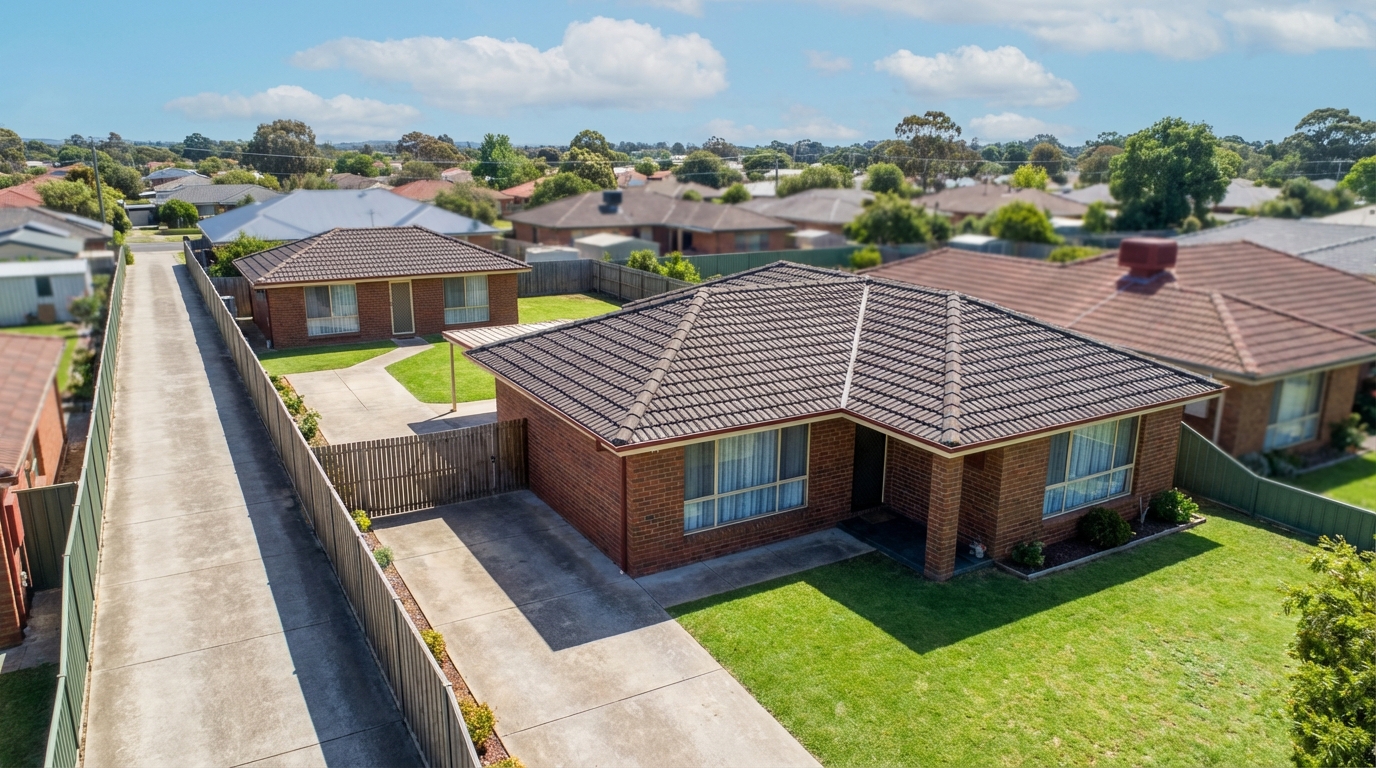
Jennifer T.
Securing Jennifer T.'s Narre Warren South investment property, with a landsize of 4445sqm, was a Premium Real Estate triumph. Our development potential analysis revealed significant subdivision opportunities, despite initial SBO overlays flagged in our council planning research. Easement checks ensured no hidden surprises. We moved swiftly; our conveyancer w…

Adam Z.
Securing Rowville for Adam Z.! Premium Real Estate identified significant development potential in this ~900sqm block. Our council planning research revealed subdivision opportunities despite existing overlays. We meticulously checked easements, averting potential future headaches. Knowing the market, we submitted our offer in early March 2025 in the dead of…
Why Chinese-Australian investors choose PremiumRea
Three of our four founding team members are Mandarin-speaking. Twelve of our last thirty engagements were conducted entirely in Mandarin or Cantonese — including bank-loan, contract-of-sale, and settlement steps.
Most Melbourne buyers agents are fluent in English only. That's a structural problem for a buyer whose strongest reading language is Chinese — Section 32 statements, contract-of-sale special conditions, council planning notices, and lender mortgage documents are dense English legal text that costs you tens of thousands of dollars if you misread one clause. The standard workaround is to bring a friend or family member as informal translator, which works until the friend isn't available for the inspection, the auction, the building inspection callback, or the cooling-off-period decision.
We removed that friction. Joey, Yan, and our acquisitions team negotiate, read contracts, and brief lenders in Mandarin and Cantonese as a default. WeChat is a first-class channel for ongoing communication; if you'd rather use Lark or WhatsApp we use those too. Our standard engagement letter is available in English / Simplified Chinese parallel-text format.
The financing layer matters too. We work with three Chinese-Australian mortgage brokers and two private lenders who specialise in newly-arrived migrants who don't yet have an Australian credit history. SMSF structures involving Chinese parent-child arrangements are routine for us; we have a tax-resident solicitor on retainer for the cross-border angles.
中文版页面在这里 — every section above and below is mirrored in Chinese, with the same level of detail, on the dedicated /zh/ subtree.
Frequently asked questions
What does a Melbourne buyers agent actually do?
A Melbourne buyers agent represents you — the buyer — in every step of acquiring a property: identifying suburbs that match your strategy, sourcing on-market and off-market listings, conducting due diligence, attending inspections on your behalf, negotiating with selling agents, bidding at auction, and managing the contract through to settlement. We are the only licensed party in a typical transaction whose legal duty is to the buyer; selling agents work for the vendor and earn more if you pay more.
How much does a Melbourne buyers agent cost in 2026?
PremiumRea charges a flat AUD $15,800 + GST for full investment-property acquisition — fixed regardless of purchase price. Industry-wide, fees range from 1.5% to 3% of purchase price (so $12,000–$30,000 on an $800k property), or flat fees from $9,500 to $25,000+. Be cautious of agents whose fee scales with purchase price — that creates a perverse incentive to push you toward a more expensive property.
Are buyers agents in Victoria licensed?
Yes. To act as a buyer's agent in Victoria you must hold either a full Estate Agent licence or a Real Estate Agent's Representative authority issued by Consumer Affairs Victoria. PremiumRea operates under licensed estate agents, carries professional indemnity insurance, and is accountable to CAV's regulatory framework. Always ask for a licence number before engaging anyone — there is no excuse for not providing it.
What's the difference between a buyer's agent and a buyer's advocate?
In Victoria the two terms are used interchangeably and there is no legal distinction — both refer to the same regulated role under the Estate Agents Act 1980. Some practitioners prefer 'advocate' to emphasise the advisory nature of the work; others use 'buyer's agent' because it is the search term most people recognise. Either way, the licence requirements, ethical obligations, and scope of work are identical.
Do I need a buyer's agent if I am a first-home buyer?
Not strictly — but for first-home buyers the cost of getting it wrong is high, often higher than the agent fee itself. The most common first-home buyer mistakes we see are paying 5–10% above fair market value (because you didn't know what comparable sales looked like) and buying in a suburb whose growth fundamentals are already exhausted. We charge less for first-home-buyer engagements (the search is usually narrower) and the negotiation savings typically cover our fee in full on the first offer.
Can a buyer's agent help when the purchaser is a self-managed super fund?
On the property side, yes — on the strategy, no, and you should be wary of any buyer's agent who says otherwise. PremiumRea holds no Australian Financial Services Licence and no Australian Credit Licence: we do not advise on whether an SMSF suits you, how to establish one, how to borrow inside it, or which lender to use, and we do not recommend lenders. What we do is act as buyer's agent once the fund has already decided, on licensed advice, to acquire direct residential property — sourcing stock the fund can actually hold, running title and eligibility checks, and negotiating. Because construction and structural change are not permitted while a limited recourse loan is on foot (ATO SMSFR 2012/1), a fund is generally looking at move-in-ready stock; that is a property constraint, not a recommendation. Speak to a licensed financial adviser and a registered tax agent about everything else.
Will a buyer's agent show me off-market properties?
We will if we can find them — and at any moment we typically have 6 to 14 active off-market opportunities sourced from our agency network, vendor solicitors, and property managers whose owners are quietly considering selling. But honest disclosure: 'off-market' is not a magic discount. Off-market vendors are usually motivated, not desperate, and often already have a target price in mind. The benefit is reduced competition and longer due-diligence windows — not a guaranteed bargain.
How long does a buyer's agent engagement take from sign-up to settlement?
Typical timeline is 6 to 14 weeks. Stage breakdown: strategy consultation and brief sign-off (week 1), shortlist development (weeks 1–3), inspections + due diligence on the leading 2–3 properties (weeks 3–5), offer negotiation or auction (weeks 4–6), contract execution and 30–60 day settlement (weeks 6–14). We never rush a client into a property to close out a quarter; if the right property hasn't appeared by week 14 we extend the engagement at no extra fee.
What can PremiumRea show me that other Melbourne buyers agents cannot?
One thing, and it is checkable rather than asserted: our whole transaction record is published as open data. All 345 purchases, settled January 2023 to September 2025 and valued November 2025, are deposited under CC-BY 4.0 with a permanent DOI (10.5281/zenodo.20095886) and mirrored on Kaggle and Hugging Face. The median gross rental yield after works across those 345 is 5.77%; 291 of 345 reached 5% or better and 14 reached 8% or better. Anybody can download the rows and check us. We deliberately do not publish a league table of competitors' transaction counts, because those figures are self-reported and unauditable — including our own before we deposited them. If a number matters to your decision, ask every agency you talk to for a verifiable source rather than a figure on a web page.
Will a buyer's agent guarantee I get the lowest possible price?
No, and any buyer's agent who says they will is misleading you. The lowest possible price is whatever a desperate vendor accepts — and there is no way to know in advance which vendors are desperate. What a buyer's agent brings is evidence and a professional negotiator — comparable-sales analysis, days-on-market, and pre-approved financing at the table — so that you are not the one guessing. Across our 345 published transactions, negotiated outcomes have historically ranged $30k–$80k below initial asking price or bank valuation. That is a record of past engagements, not a forecast, and no particular saving is promised on any individual purchase.
What happens if I don't end up buying anything during the engagement?
If we cannot find a suitable property within the agreed brief and budget, we extend at no charge until we do. If you change your mind about buying altogether before any offer is signed, the engagement fee is partially refundable on a pro-rata basis (specifics in the engagement letter). We have never had a client engage us without buying — but the door stays open both ways.
How do I get started with PremiumRea?
Book a free 30-minute strategy call at the link below. The call is for both sides: we walk you through how we work, you tell us your investment goals, financing position, and timeline. If we agree it's a fit we send the engagement letter; if either side feels it's not a match nothing further happens. No high-pressure sales — we close 60+ transactions a year already and our throughput is set by quality, not lead volume.
Do you cover Ballarat, Geelong, Bendigo, and other regional Victoria?
Yes. About 18% of our last 12 months of closings were regional Victoria — predominantly Ballarat, Geelong, and Wyndham/Werribee corridor. Regional VIC suits investors who want lower entry price ($400k–$650k vs. metro $700k–$1.1m) with comparable yields after the granny-flat layer is added. We don't cover regional NSW or QLD — see 'What we won't do' above for the honest exclusions.
Can you handle a buyer who lives overseas?
Yes. Approximately 22% of our active engagements are with buyers physically outside Australia (mainland China, Hong Kong, Singapore, UK). The full transaction can be conducted via video call, WeChat, and signed PDF — there's no in-person requirement until settlement, which can be handled by your conveyancer with a remote PEXA workflow. We coordinate with FIRB for any FIRB-applicable purchases (most overseas-resident purchases require FIRB approval). The fee is unchanged.
How is a Melbourne buyer's agent different in 2026 vs. five years ago?
Three concrete shifts: (1) Off-market access matters more — auction clearance has been below 60% three of the last five quarters, vendors are increasingly trying off-market sales first to gauge interest. Buyer's agents with genuine off-market networks see 30%+ more deals than competitors who rely only on listings sites. (2) Council overlays have multiplied — 21 new overlays added across Greater Melbourne LGAs since 2023. Missing one (PAO especially) can wipe 30% of property value when the council acquires for road widening or social housing. (3) The second-dwelling layer is now the main lever on yield rather than a niche one. On our own published data, the 212 granny-flat additions recorded a median gross yield after works of 5.79% against 5.16% for the 85 properties that received only a cosmetic renovation — a 0.63-percentage-point difference on the whole property, measured across 345 purchases settled 2023–2025 (DOI 10.5281/zenodo.20095886). Builders who quote 12–18% for the same work are dividing by the build cost alone and excluding the land; read the denominator before you read the percentage.
What's the difference between PremiumRea's full service and a free 30-minute consultation?
The free 30-min call is a fit assessment, not a strategy session. We listen to your situation, ask 8-10 clarifying questions, and tell you whether we think we can help. We're explicit about what we don't do (see the 'What we won't do' section) so you can decide quickly whether we're the right operator for your goal. The full engagement begins after the engagement letter is signed and the AUD $15,800 + GST fee structure starts. If we think you're better served by a different agent or a different strategy entirely (e.g., an SMSF specialist accountant before a property), we'll tell you that on the free call — sending you elsewhere costs us nothing and earns trust.
What happens after settlement — does PremiumRea stay involved?
If your strategy includes a granny flat (most common), rooming house conversion, or full renovation, our construction team is briefed within 7 days of settlement and we coordinate the build through to OC (Occupancy Certificate). Property management is optional via our 4.9% + GST service — we are not a property management firm primarily, so this is offered for clients who prefer one-stop convenience over choosing among the wider PM market (Melbourne PM averages 7.7%, so we are still 30%+ cheaper). Six months and 12 months post-settlement, we contact you for a check-in: actual rent versus modelled rent, valuation, refinance options. No upsell pressure — many clients use this check-in to simply confirm everything is going to plan, then disappear into normal operations until they're ready for the next property.
Have you been in the news?
Joey Don and Yan Zhu have been quoted in Domain, realestate.com.au, Smart Property Investment, and Property Update across 2024–2026, primarily on Melbourne suburb data, granny flat ROI, and SMSF property structuring. We don't aggressively pitch press — most coverage comes from journalists searching for someone with the actual portfolio data to back up a thesis, then finding our public Suburb Stats tool. The Team page lists recent coverage with links.
Three recent client outcomes
Joey and the team negotiated $45k off the asking price on our Narre Warren South property and identified subdivision potential we hadn't seen. Settled May 2025. The 4,445sqm block is now valued at $1.65m — up from our $1.56m purchase, and that's before the granny-flat addition we have planned for next year.
I came to PremiumRea wanting an investment property, not a dream home — and that distinction is what made this work. They sourced an 890sqm Hallam block I never would have considered. The granny-flat addition took the rent from $640/wk to $900/wk. Yield is now 5.01% and the block has $45k of capital gain on top.
Frankston purchase, $800k, late March 2025. Joey's team flagged subdivision potential the listing agent never mentioned. Rent is now $800/week, yield 5.19%. Current valuation is $860k — a $60k uplift in under 12 months on a market everyone keeps saying is flat. Worth every dollar of the agent fee.
Go deeper
Each of these covers one common question in detail. Internal-linked from the relevant section above.
Ready to talk?
I'll personally take the first call — 30 minutes, free, no obligation. Tell me the position you're starting from (deposit, lender pre-approval, target suburbs, timeline) and I'll tell you whether PremiumRea is the right fit. If we're not, I'll refer you to whoever I think is — there are good operators in this city beyond us, and pretending otherwise wastes your time.
— Joey Don, Co-Founder & CEO, PremiumRea
PremiumRea Pty Ltd · Melbourne, Victoria · REIV-licensed estate agents · Professional indemnity insurance current
Want a new feature?
Tell us what to build next — get free Beta access.
Share an idea →